
This visa allows churches, mosques, temples, and other religious institutions to bring qualified individuals into the U.S. to perform duties in a religious capacity. Meanwhile, for foreign nationals traveling to the U.S. for short-term business engagements, the B-1 Business Visa may be the appropriate option. This visa is commonly used for attending conferences, negotiating contracts, or consulting with business associates but does not permit employment in the U.S. Navigating the U.S. nonimmigrant worker entry process, whether through healthcare worker visas, the R-1 visa for religious professionals, or the B-1 Business Visa, can be intricate and time-consuming. Each category has its own set of requirements and application procedures, so early preparation is key to a successful outcome. By starting the process early and seeking the guidance of an experienced immigration attorney, foreign nationals and U.S. employers can ensure that all necessary steps are taken to meet visa quotas and deadlines. Contact Hanlon Law Group, P.C. in Pasadena, CA today to consult with a knowledgeable immigration attorney about temporary work visas.
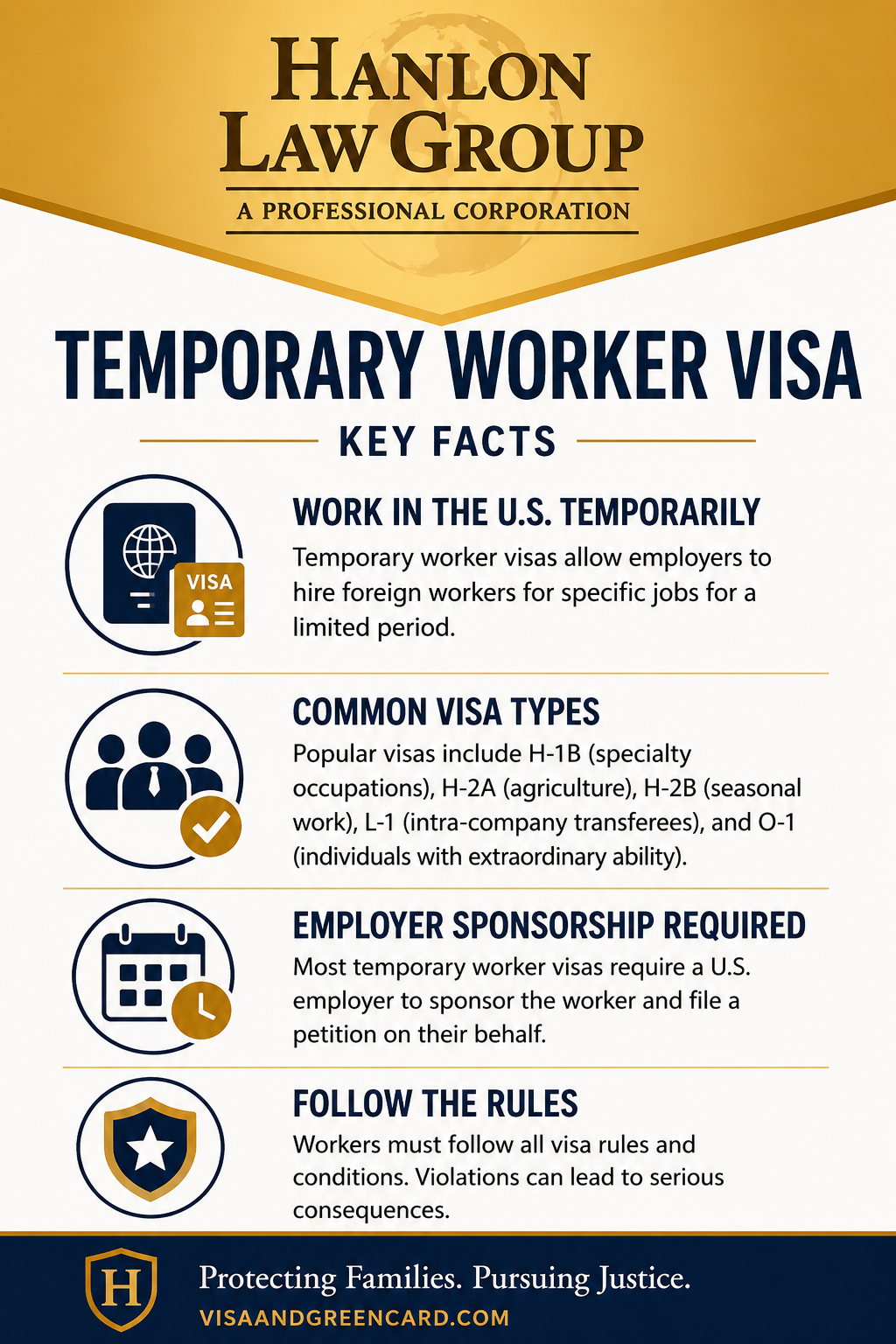
Before hiring certain nonimmigrant workers, employers must first obtain approval from the U.S. Department of Labor (DOL). This applies to categories like H-1B (specialty occupations), H-2A (temporary agricultural workers), and H-2B (skilled and unskilled temporary workers). Employers must provide evidence of:
Only after DOL certification can employers petition the USCIS.
Before applying for a temporary worker visa, the prospective employer must submit a Petition for Nonimmigrant Worker (form I-129) to the USCIS. Given the potential for long processing times, it's advisable for employers to file early. Currently, petitions can be submitted up to six months before the expected work commencement date.
USCIS petition approval doesn't guarantee visa issuance or U.S. entry. Like other nonimmigrant applicants, workers must still apply for a visa at their local U.S. embassy or consulate and attend an interview. Most will also need to demonstrate their intention to return home after their U.S. stay, through evidence like family ties or permanent residence.
Temporary workers' spouses and unmarried minor children can also apply for nonimmigrant visas. It's generally best to submit all nonimmigrant visa applications simultaneously. The primary visa applicant should be prepared to prove they can financially support their family in the U.S. Note: with few exceptions, spouses and children may not work in the U.S. or they risk deportation.
Each temporary worker category has a set duration for U.S. stays. If work isn't completed before this time runs out, an extension can be sought from the USCIS. After the extension expires, temporary workers must return home and stay for a specific period before reapplying for a temporary work visa. Need assistance with temporary worker visas? Call (866) 227-5527 or contact us online to speak with an experienced immigration attorney at Hanlon Law Group, P.C. in Pasadena, CA. We're here to guide you through the process and provide expert advice tailored to your situation.
Reviewed for legal accuracy by Daniel P. Hanlon on October 05, 2026
The trusted Los Angeles immigration attorney at Hanlon Law Group, P.C. is waiting to speak to you, find out more about your immigration needs, and explain your options. Having handled countless professional visa applications for foreign professionals and U.S. employers, our lawyer has the experience and insight you can count on for exceptional service and representation.
Our experience, skills and dedication to our clients are backed by the following, which all of our clients can expect to receive:


