(866) 227-5527Send Payment

M-1 & F-1 Student Visa Attorney in Los Angeles

FREE CONSULTATION

Los Angeles Student Visa Lawyer

The M-1 and F-1 student visas are designed for foreign nationals seeking to pursue their education in the United States. The F-1 visa is intended for academic students attending universities, colleges, high schools, or language training programs, while the M-1 visa is reserved for vocational or technical studies. Both visa categories provide opportunities for students to study in the U.S., but the application process requires strict adherence to immigration rules. Any mistakes or misrepresentations during the process can lead to serious consequences, including denials, ineligibilities, or even accusations of visa fraud. Applicants must ensure they meet all the necessary criteria and provide accurate information to avoid being deemed ineligible for a student visa. Denials or ineligibilities may occur for several reasons, including insufficient documentation, failure to prove intent to return to their home country, or errors in the application itself.
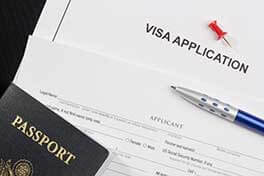
U.S. Visa Application and U.S. Passport

In cases where visa fraud is suspected—such as providing false information or using fraudulent documents—the consequences can be severe, potentially barring the individual from entering the U.S. in the future. It is essential for students to work closely with their academic institutions and immigration professionals to ensure that all aspects of their visa application are handled properly. In addition to student visas, individuals visiting the U.S. for short-term purposes may apply for a visa for visitors, such as the B-1 Business Visa or B-2 Tourist Visa. These visas allow foreign nationals to enter the U.S. for temporary stays, but they come with their own set of rules and requirements. Whether applying for an M-1 or F-1 student visa or a visitor visa, understanding and following the proper procedures is key to a successful application and avoiding complications related to denials, ineligibilities, or accusations of visa fraud. If you're applying for a student visa, facing a denial, or have inquiries about the prerequisites for studying in the U.S., reach out to a knowledgeable immigration lawyer at Hanlon Law Group.
 

Steps for student visa application

Steps for Student Visa Application

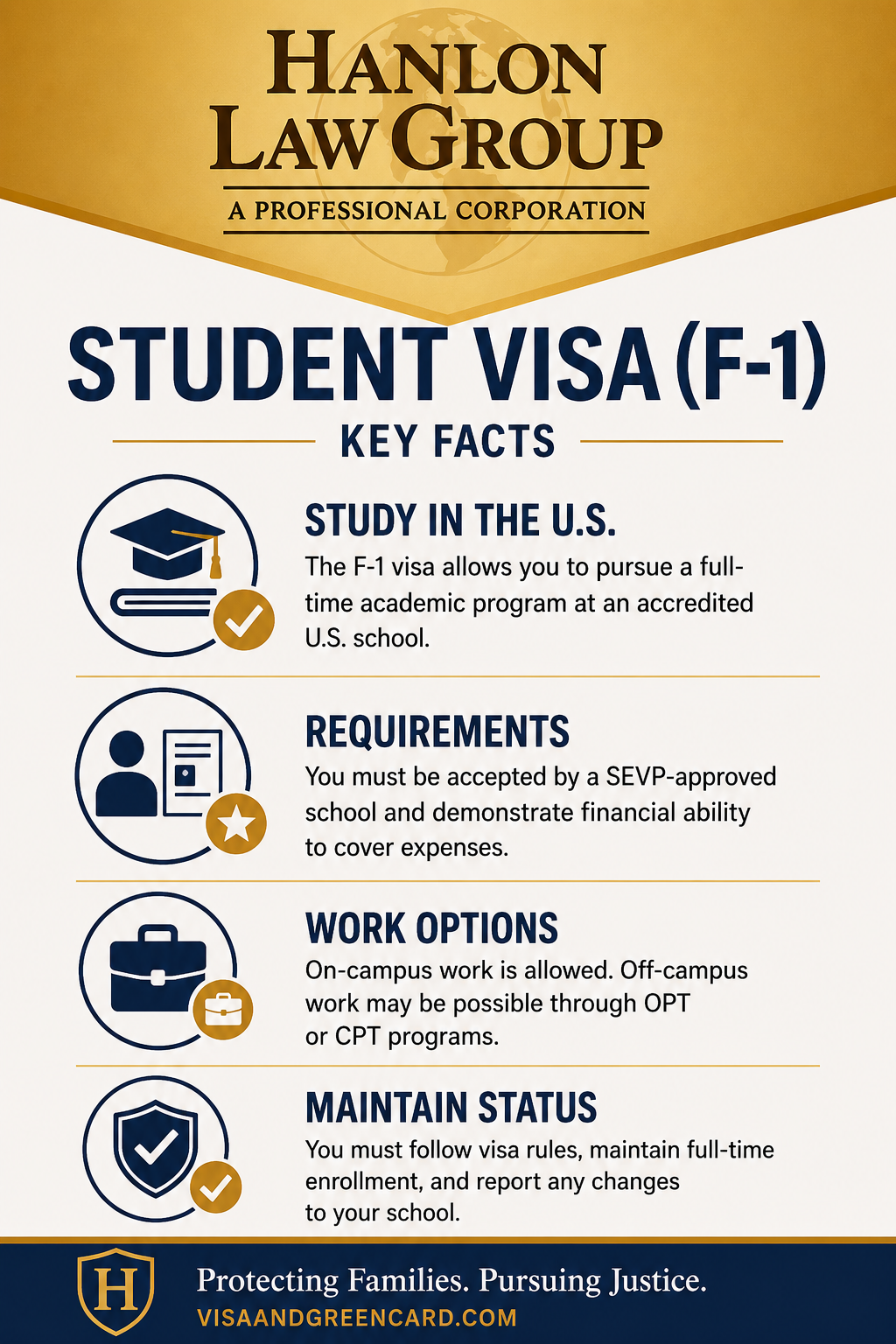
The U.S. offers two primary student visas: F-1 visas for those joining full-time academic programs like colleges, universities, and language training; and M-1 visas for individuals pursuing nonacademic or vocational courses. Like other nonimmigrant visa seekers, student visa aspirants must liaise with their nearest U.S. consulate or embassy for an in-person interview. Each student's scenario can differ, leading to varying documentation requirements. Typically, students should be ready to present:

  • Proof of Acceptance: Demonstrating acceptance into a full-time U.S. educational or vocational program. The school should also have USCIS approval. The I-20 form from the institution serves as the acceptance evidence.
  • Educational Credentials: Proof of completing necessary courses or their equivalents for the chosen U.S. program. Unless enrolling in an English training program, proficiency in English is a must. Exceptions exist if the institution offers English classes or if courses are in the student's native language.
  • Financial Stability: Evidence of sufficient funds to cover tuition and living expenses in the U.S. First-year expenses should be available during the visa application.
  • Intent to Return: A strong indication of returning to their home country post-studies. Failure to convince can lead to visa application rejections.

It's advisable to initiate the student visa process once accepted into a U.S. program. Peak visa processing times are June through August. Although consulates can't issue visas more than 120 days before the program's start, students can apply post-receiving their I-20 form.


Related: Can You Reapply After a U.S. Visa Denial?

Consult an Immigration Specialist

Numerous international students have benefited from U.S. education. Securing a student visa can be intricate and lengthy. A seasoned Los Angeles immigration lawyer at Hanlon Law Group is here to guide you for your consulate interview. Contact us or call 866 227-5527 for assistance.

DISCLAIMER: This site and its content are for informational objectives only and shouldn't be perceived as legal counsel. Always consult a qualified legal professional for advice on any legal issue.

Frequently Asked Questions

The M-1 student visa is intended for vocational or technical training programs, while the F-1 student visa is for academic studies at accredited institutions, such as colleges and universities. M-1 visa holders cannot work during their studies, except for practical training, while F-1 students may work part-time on campus and apply for optional practical training (OPT) off-campus. M-1 visas are more restrictive regarding duration and work opportunities compared to F-1 visas. If you are considering a vocational course in Los Angeles, consulting with an immigration attorney can help determine the best visa option for your needs.
To apply for an F-1 student visa, you need a valid passport, Form I-20 from your U.S. school, and Form DS-160. You must pay the visa application fee and provide a passport-sized photo. Additionally, you’ll need proof of financial ability to cover tuition and living expenses, transcripts and diplomas from previous schools, and evidence of ties to your home country to ensure you intend to return after your studies. An attorney in Los Angeles can guide you through the documentation process to ensure all requirements are met and increase your likelihood of a successful application.
Yes, Our attorney in Los Angeles can assist with M-1 student visa applications. We can help ensure that all required documentation is correctly prepared and submitted, provide guidance on financial requirements, and assist with the visa interview process. Our attorney can also help address any issues or complications that arise during the application process, increasing the chances of a successful outcome. With our professional guidance, you can navigate the application process more smoothly and avoid common pitfalls that could lead to delays or denials.
If your student visa application is denied, you should first understand the specific reasons for the denial. Gather additional documentation or correct any issues noted in the denial. Consider reapplying with stronger evidence of your eligibility, such as proof of financial stability or stronger ties to your home country. Consulting an immigration attorney can also provide guidance on addressing the reasons for denial and improving your chances in a reapplication.
Generally, F-1 students are limited to on-campus work during their first academic year. Off-campus employment requires special authorization, such as Optional Practical Training (OPT) or Curricular Practical Training (CPT). Unauthorized employment can lead to visa termination. To qualify for OPT or CPT, students must meet academic and program requirements. Filing proper authorization is crucial to avoid status violations. Legal and school advisors can guide students through the correct process.
Falling below full-time enrollment without prior authorization may violate visa status. Students should immediately contact their Designated School Official (DSO) to request approval for a reduced course load if there are valid academic or medical reasons. Failure to obtain permission can result in termination of SEVIS records. Maintaining communication with the DSO is critical. Legal advice can also help if reinstatement becomes necessary. Proactive steps prevent unlawful presence and maintain eligibility for future visas.
In 2026, start by making sure your school documents are correct, especially the information that will be used for your visa application and interview. Prepare clear proof you can pay tuition and living costs, because financial uncertainty is a common reason applications fail. Be ready to explain your study plan in plain language, including why the program matches your goals and why you chose that school. Bring evidence of strong ties outside the United States, because student visas require you to intend a temporary stay. Answer questions consistently with what you wrote in your application, because contradictions can create credibility issues. Finally, keep your documents organized and easy to review so the interview stays focused and efficient.
Yes—students may apply to change status to another visa category, such as H-1B for work or a dependent visa through family ties. This requires filing with USCIS and meeting the eligibility of the new visa. The student must maintain valid status until the change is approved. Timing is critical, especially if transitioning from student to employment-based visas. Consulting an immigration attorney ensures a smooth change without gaps in status. Careful planning reduces risks of denial or unlawful presence. For expert advice and support, contact us to improve your chances of securing your student visa.

Additional Information in Los Angeles

  • U.S. Department of StateStudent Visas: Explains the application process for F-1 and M-1 visas, including eligibility requirements, required documentation, and steps for scheduling and attending a visa interview. It covers the differences between the two visa types, such as their intended purposes (academic versus vocational training). This site helps applicants understand the full process, from preparing documents to what to expect during the interview, ensuring they meet all necessary requirements.
  • USA.govGet a student visa to study in the U.S.: An overview of the F-1 and M-1 visa application process, including eligibility criteria and required documentation. It details the steps for applying, such as completing the Form DS-160, paying the visa fee, and scheduling a visa interview. The page also highlights important considerations for maintaining visa status while studying in the U.S. This resource helps applicants understand each stage of the application process and what is needed to ensure a successful application.
  • Boundless ImmigrationThe F-1 Student Visa, Explained: Explains the eligibility requirements, application process, and documentation needed for the F-1 visa. It provides guidance on how to maintain visa status, work opportunities for students, and the steps for applying, including obtaining Form I-20 and scheduling a visa interview. The page also discusses potential challenges and tips for a successful application. This information is valuable for both F-1 and M-1 visa applicants, helping them navigate the complexities of the student visa process.

Contact the Experienced Los Angeles Immigration Lawyer at Hanlon Law Group, P.C.

The trusted Los Angeles immigration attorney at Hanlon Law Group, P.C. is waiting to speak to you, find out more about your immigration needs, and explain your options. Having handled countless professional visa applications for foreign professionals and U.S. employers, our lawyer has the experience and insight you can count on for exceptional service and representation.

Our experience, skills and dedication to our clients are backed by the following, which all of our clients can expect to receive:

free & confidential
consultations

You don’t have to pay us anything to discover more about how we can help you and what you need to do to resolve your employment-based immigration needs.

Continuity of legal
representation

The attorney at Hanlon Law Group, P.C. will oversee your case from start to finish. This can provide peace of mind that your case will not be passed off to a non-lawyer associate, or to someone who is not intimately familiar with your case.

state-of-the-art
case management technogy

Our cutting-edge system facilitates the visa petition process, while providing clients with real-time case information about the status of their petition, PERM certifications, etc.

Personal attention
from lawyers & staff

We take pride in providing old-fashioned, personal service and promptly responding to our clients’ inquiries and immigration needs whenever they arise.

Flexible payment
options

We accept all major credit cards. Payment plans may also be available.

Multilingual
Immigration services

We provide immigration services in various languages, including (but not necessarily limited to) Spanish, Mandarin, Cantonese, Vietnamese, Korean, Japanese, Bahasa Indonesian, Tagalog, and Fukienese.
CONTACT US

READY TO TALK?

Hanlon Law Group, P.C. is ready to help you with all your immigration & nationalization legal needs. Contact us now for the help you need & deserve.
OFFICE LOCATION
225 S Lake Ave, Suite 1100
Pasadena, CA 91101-4889
CALL US TODAY
626-684-3712
OFFICE LOCATION
555 West 5th Street, 35th Floor
Los Angeles, CA 90013
CALL US TODAY
213-699-4603
© 2026 Hanlon Law Group. All Rights Reserved | XML Sitemap | HTML Sitemap
Powered by:
starmenuchevron-upchevron-down