
While the term “sibling” isn’t explicitly defined in United States immigration law, for a U.S. citizen to petition for a brother or sister to immigrate using a sibling visa, clear evidence must be presented showing that both individuals share at least one parent. This proof can come from birth certificates or other legal documents that demonstrate the familial relationship. Establishing this connection is crucial for the sibling visa to move forward, as any gaps in documentation can lead to delays or denials. In contrast to sibling petitions, the process for a parent visa requires that the U.S. citizen petitioner demonstrate their direct relationship to their parent. This can also apply to step-parents, provided the marriage between the parent and step-parent occurred before the U.S. citizen turned 18. Like the sibling visa process, a consular interview will play a key role in verifying the relationship and ensuring all necessary paperwork is accurate. The consular interview offers an opportunity to clarify any questions about the family structure and resolve any potential discrepancies.
For both sibling and parent visa petitions, if there are dependent children involved, they may also qualify for a dependent visa, allowing them to accompany their parent or sibling to the U.S. These dependent visas, however, are tied to the approval of the primary visa applicant, meaning that accurate documentation and a successful consular interview are vital for the entire family's immigration process. At Hanlon Law Group, P.C., the dedicated Los Angeles sibling visa attorney has represented individuals globally, assisting them in their immigration journey to the United States. If you're considering filing a petition for a sibling, contact the Los Angeles sibling visa expert. Benefit from a free, confidential initial consultation to explore your immigration options without any obligations. Reach out directly by calling (800) 976-5675 or emailing our firm for answers and expert advice.
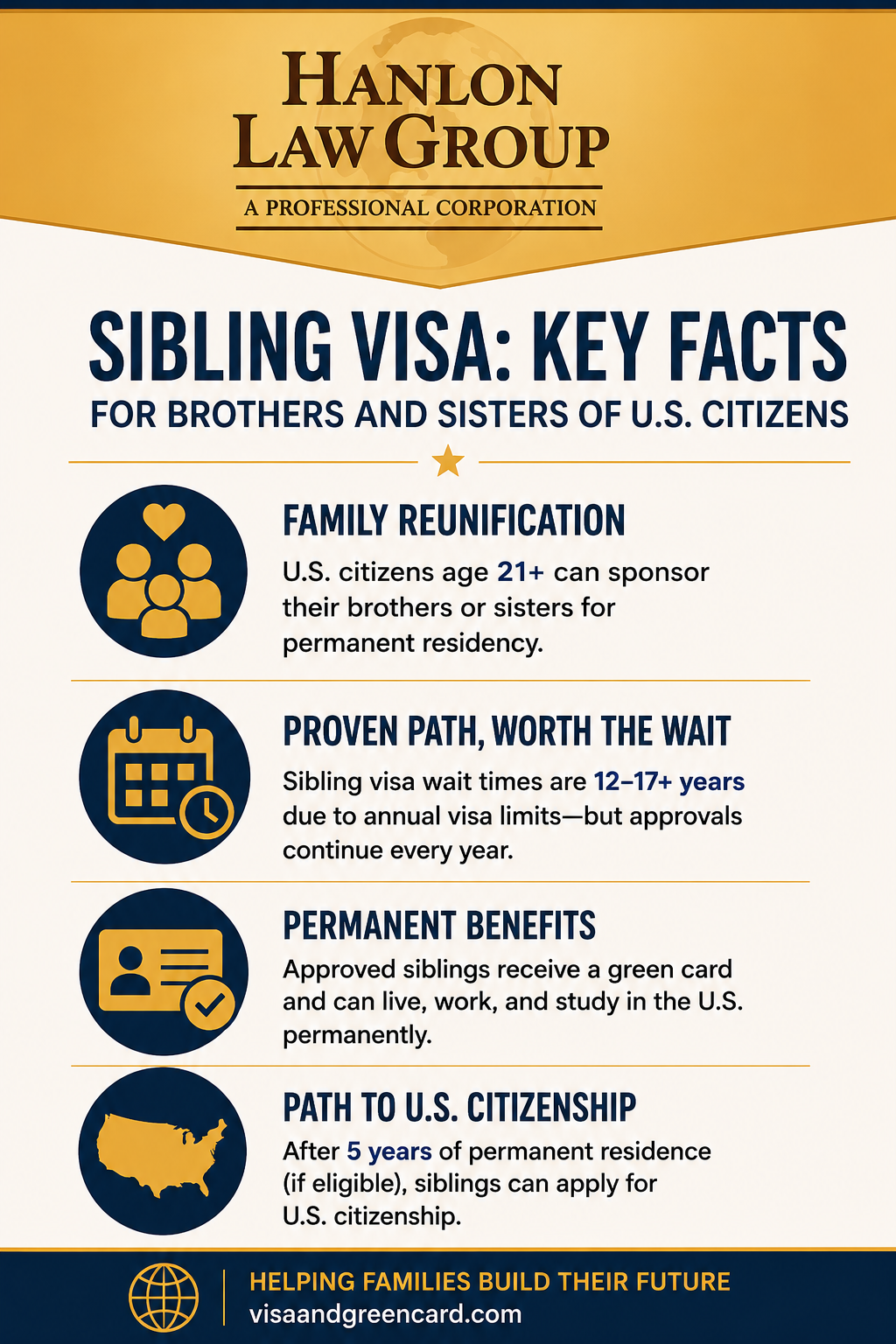
To qualify to sponsor a sibling to the U.S., the petitioner must be a U.S. citizen aged 21 or older. If these criteria are met and there are no factors making the sibling inadmissible, a petition can be filed for the sibling to become a U.S. permanent resident (green card holder). Essential documentation for a sibling visa includes:
For those in the process of filing or awaiting a sibling visa petition, you can check the processing waiting times here. It's crucial to understand that the sibling visa process can be intricate and lengthy. Engaging with an experienced sibling visa attorney can ensure accurate steps are taken, avoiding potential pitfalls and delays. The attorney at Hanlon Law Group has a rich history of assisting clients and their siblings in achieving the desired immigration status, enabling them to live and work in the U.S.
Half-siblings might also qualify for sibling visas. However, additional documentation may be required to confirm these relationships. The expert at Hanlon Law Group can provide clarity on the necessary documents for such petitions. It's noteworthy that while U.S. citizens can sponsor half-siblings, adopted individuals cannot petition for their biological siblings due to the severance of biological ties post-adoption for immigration purposes.
Related: How Do You Appeal a Denied Family Immigration Visa?
When you're ready to explore options for aiding your sibling in securing an immigration status change, it's time to consult a Los Angeles immigration expert at Hanlon Law Group, P.C. With over two decades of experience, our attorney is adept at guiding clients through the immigration maze. This expertise is complemented by:
Connect with us by calling (800) 976-5675 or sending an email to schedule a free, confidential initial consultation. We offer multilingual immigration services, including Spanish, Mandarin, Cantonese, Vietnamese, Korean, Japanese, Bahasa Indonesian, Tagalog, and Fukienese. Serving Pasadena, we represent clients throughout Los Angeles, California, and globally.
Reviewed for legal accuracy by Daniel P. Hanlon on October 05, 2026
No. A sibling’s child is not a direct derivative beneficiary of an F-4 petition. They would need to qualify independently for their own immigrant or nonimmigrant visa, such as a family-based petition or student/work visa. The F-4 visa only covers the siblings and their spouses or unmarried children. If the niece or nephew is included incorrectly, it can result in application denial or processing delays. Consult an attorney to explore separate immigration routes for them. Understanding visa scope prevents misfiling and ensures each individual’s eligibility is addressed properly. At Hanlon Law Group, P.C., we provide expert legal support to address any issues and pursue your case effectively. Reach out to us for more comprehensive information about your case.
The trusted Los Angeles immigration attorney at Hanlon Law Group, P.C. is waiting to speak to you, find out more about your immigration needs, and explain your options. Having handled countless professional visa applications for foreign professionals and U.S. employers, our lawyer has the experience and insight you can count on for exceptional service and representation.
Our experience, skills and dedication to our clients are backed by the following, which all of our clients can expect to receive:


